
MCP for teams
What is a remote MCP server (and when teams need one)?
A remote MCP server is a hosted endpoint any AI tool can connect to over the network. Here is how it differs from a local server and when a team should use it.
Most people meet MCP through a local server: something running on their own machine that a desktop tool talks to. A remote MCP server is the other half of the picture, and it is the half that makes MCP work for web tools and for teams.
Definition
Remote MCP server
A remote MCP server is a hosted endpoint, reachable over the network at a URL, that AI tools connect to over the Model Context Protocol. Where a local server runs on your machine, a remote one can be reached from anywhere and by web-based tools, so a whole team can connect to the same hosted context.
Local vs remote MCP, plainly
Both speak the same protocol. The difference is where the server runs and who can reach it.
| Local MCP server | Remote MCP server | |
|---|---|---|
| Where it runs | On your machine | Hosted, reachable at a URL |
| Reachable from | Your device only | Anywhere on the network |
| Works offline | Yes | No, needs the network |
| Suits | Desktop tools (Claude Code, Cursor) | Web tools, hosted agents, ChatGPT |
Neither is "better." They suit different tools, which is why a serious setup uses both, pointed at one shared source. For a fuller breakdown of the trade-offs, see local vs remote MCP servers.
When does a team need a remote server?
A local-only setup quietly excludes half the picture. Reach for remote when:
- Web tools are in the mix. ChatGPT and other browser-based assistants cannot talk to a server running only on someone's laptop. A hosted endpoint is how they read your context.
- Hosted agents need context. Any agent running in the cloud needs a reachable endpoint, not a local socket.
- You want one source for the whole team, independent of any one person's machine being on. A hosted endpoint is always reachable.
- People work across devices. The same context follows them without re-installing anything.
For desktop coding specifically, a local bridge is still the better path, lower latency and it works offline. The answer is usually both, which is how MCP for teams is meant to work.
Reading the same context either way
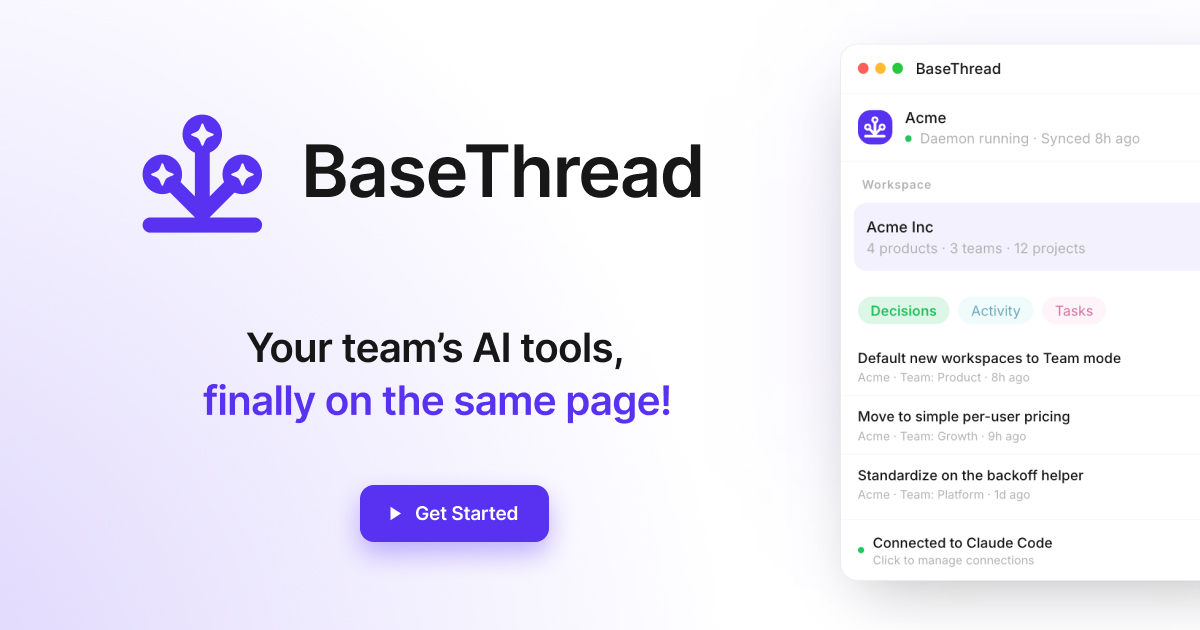
The thing that matters is not local versus remote, it is that both connect to one shared context. With BaseThread, the local bridge and the remote endpoint serve the same curated source plus the same activity-and-decisions record, so a teammate on ChatGPT and a teammate in Cursor read the same facts. How BaseThread connects over MCP shows which tools take which path, and the setup guide walks the steps.
The rule of thumb
Desktop coding tool? Local bridge. Web tool or hosted agent? Remote endpoint. Either way, point it at the one shared context, not a per-person copy.
TL;DR
A remote MCP server is a hosted endpoint AI tools reach over the network, as opposed to a local server on your own machine. Remote suits web tools, hosted agents, and team-wide access; local suits desktop coding tools and works offline. A good team setup uses both, connected to one shared context, so every tool and teammate reads the same source regardless of surface.
Local bridge or hosted endpoint, both reading one shared team context.
Related reading
MCP for teams: one context layer across your AI tools
MCP for teams turns scattered docs and decisions into one context layer every AI tool reads, so Claude Code, Cursor, and ChatGPT share the same source.
How to set up a shared MCP context server for your team
Set up a shared MCP context server your whole team's AI tools read: curate the context, choose local or remote, connect tools, scope access, and let it update.
What is shared context for AI tools? (2026 guide)
Shared context for AI tools is the company, project, and decision background every AI reads automatically, so your whole team's tools stop guessing.
RAG vs MCP: when to retrieve, when to share context
RAG retrieves chunks from documents; MCP connects tools to live context and actions. Here is the real difference, when to use each, and how they work together.
Frequently asked questions
What is a remote MCP server?
A remote MCP server is a hosted endpoint, reachable over the network at a URL, that AI tools connect to over the Model Context Protocol. Unlike a local server that runs on your own machine, a remote server can be reached from anywhere and by web-based tools, so a team can connect ChatGPT, hosted agents, and desktop tools to the same hosted context.
Remote vs local MCP: which should a team use?
Both, for different surfaces. A local MCP server runs on each machine and works offline, which suits desktop coding tools like Claude Code and Cursor. A remote MCP server is hosted and reachable from anywhere, which suits web tools and hosted agents. The point for a team is that both connect to the same shared context, so it does not matter which surface a teammate uses.